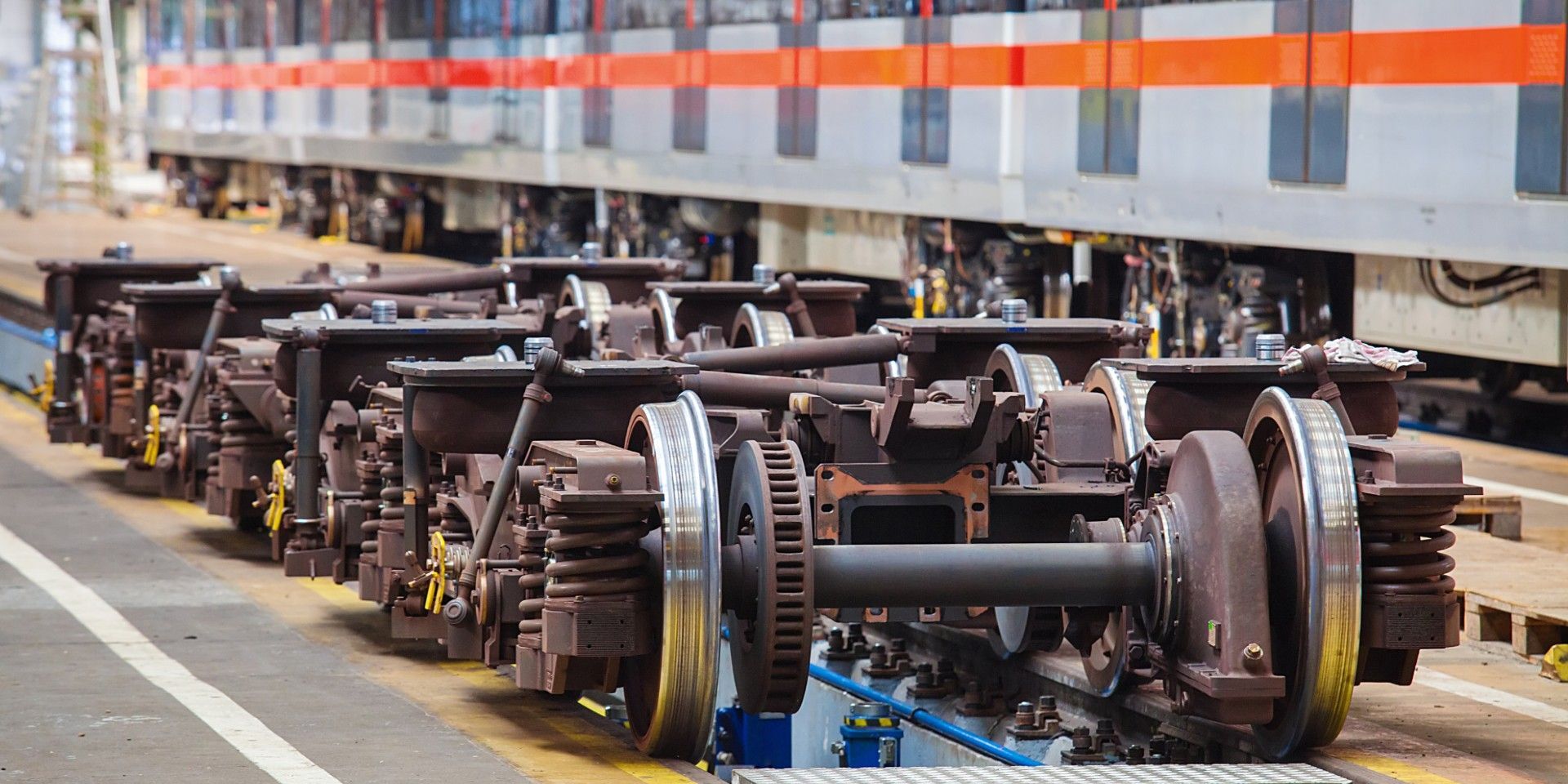
HANTON Law Firm provided comprehensive legal assistance in the preparation of documentation for Service Infrastructure Facilities
HANTON legal services included the preparation of complete documentation related to the functioning of the Service Infrastructure Facilities (hereinafter referred to as the ‘OIU’), specifically including the facility regulations, price list draft, facility access agreement, as well as an application for entry in the Register of Service Infrastructure Facilities kept by the President of the Office of Rail Transport.
The Law Firm provided Clients with comprehensive legal services related to the establishment and operation of OIU, ensuring full compliance with the generally applicable provisions of law, including the provisions of the act on rail transport as well as the literary achievement in the field of competition law, the principles of competitive and non-discriminatory access to service infrastructure and the jurisprudence of the Court of Justice of the European Union. The Law Firm's services also included the rules for applying the Commission Implementing Regulation (EU) 2017/2177 on access to service facilities and rail-related services, which precisely defines the manner of using the Facilities.
The provisions regarding the rules for providing OIU and the obligations of the manager are included primarily in Chapter 6a of the Act on rail transport and in the aforementioned Regulation (EU) 2017/2177.
What are the Service Infrastructure Facilities?
Objects of service infrastructure are construction works along with the land on which they are situated, as well as installations and devices, intended in whole or in part to provide one or more services referred to in section 2 and 3 of Annex 2 to the Act on Rail Transport.
The Objects of Service Infrastructure are, for example:
1. freight terminals;
2. classification yards and shunting stations equipped with devices, other than railway traffic control devices, intended for the formation of trains or maneuvers;
3. stabling tracks;
4. technical support points, except for repair points intended for high-speed trains or other types of rolling stock requiring specialized facilities;
5. technical stands, including rolling stock cleaning and washing stands;
6. maritime and inland port infrastructure with access to railway tracks;
7. railway petrol stations and refueling installations located at these stations.
Obligation to facilitate the OIU
Directive 2012/34/EU and the Act on Rail Transport provide for the obligation to ensure non-discriminatory access to services provided in the OIU for all rail carriers. Providing access to the Service Infrastructure Facility consists in enabling rail carriers, at their request, to access:
- to the railway tracks at this facility and
- to use the services referred to in section 2 and 3 of Annex 2 to the Act, for which the facility has been specially adapted.
If it is required by the specificity of the services provided, the provision of the facility also includes the use of the facility.
Obligation to develop the OIU regulations
In accordance with applicable regulations, the facility operator is obliged to develop the regulations of access to the facility. The regulations should specify, in particular:
1. the objects it relates to and their types;
2. the scope of making facilities available for which the operator is responsible;
3. the procedure for making the facilities available, including the deadline for submission and the scope of information that should be included in the request for access to the facility;
4. detailed technical conditions for access to facilities;
5. the amount of fees charged by the operator to rail carriers for access to the facility.
The regulations should be published no later than 2 weeks before the date of publication of the network regulations on the website of the facility operator.
The OIU Registry
The provision of Article 36f, section 3, item 2 of the Rail Transport Act imposes an obligation on the operator of a service infrastructure facility to provide the President of the Office of Rail Transport with data on facilities it manages. The Office of Rail Transport has created a special application that allows you to easily provide information on service infrastructure facilities through an electronic online form. The application is available at https://roiu.utk.gov.pl. Entering data requires prior registration in the system, including the provision of an e-mail address.
The following data is collected in the OIU register:
1. the name of the entity, its seat and address or name, surname as well as address of residence:
- owner of the facility,
- facility manager,
- operator;
2. the rail networks that are connected with the facility;
3. the scope of services that can be provided at the facility.
It should be remembered that it is the OIU manager's responsibility to update the data entered in the Registry.
Newest articles
-

HANTON Law Firm’s Participation in the 2026 Railway Telecommunications Congress
28-04-2026The latest edition of the 2026 Railway Telecommunications Congress took place in February—an event dedicated to the latest trends in the digitalization of rail transport and the development of telecommunications solutions for rail infrastructure and rolling stock.
-

HANTON advised PKP PLK during mediation with the consortium implementing the GSM-R project
10-02-2026We are pleased to announce that PKP Polskie Linie Kolejowe S.A. has reached a settlement with the consortium of Nokia Solutions and Networks, Fonon, and SPC-2, with the participation of the General Prosecutor’s Office of the Republic of Poland. HANTON Szalc Zięba & Partners had the honor of supporting PKP PLK during the mediation.
-

HANTON Law Firm participates in the 15th Railway Congress.
14-11-2025HANTON Szalc Zięba & Partners once again participated as a partner in one of the most important events in the railway industry – the 15th Railway Congress. During the debate on deregulation and challenges in the freight transport market, Managing Partner Michał Zięba, PhD, took the floor.
-

Managing Partner of HANTON as a speaker at the MFiPR workshop on contracting PSC contracts
04-10-2025On Friday, October 3, 2025, a workshop on contracting PSC contracts and EU funds for public transport was held at the headquarters of the Ministry of Funds and Regional Policy, during which attorney Michał Zięba, PhD - Managing Partner of the HANTON Szalc Zięba & Partnerzy Law Firm - gave a presentation entitled: "Passenger transport in the public service - competitive tendering and entrustment".
-

HANTON participates in the 16th edition of the TRAKO International Railway Fair
27-09-2025On September 23–26, 2025, HANTON Szalc Zięba & Partners participated in the 16th edition of the TRAKO International Railway Fair – the largest rail transport industry event in Poland and the second largest in Europe.
